Showing posts with label biofuel. Show all posts

How to make biofuel | Make your own Biodiesel page 2

How to make biofuel

Ethyl esters -- making ethanol biodiesel

Making ethyl-esters biodiesel using ethanol is a tricky process, not as simple as making methyl esters with methanol. It's not for novices -- learn how to make biodiesel with methanol first.

Methods and recipes for ethyl-esters biodiesel are available here, along with a How-To from a master home-brewer who has been making and using his own ethyl-esters biodiesel for years.

See:
Ethanol biodiesel

Reclaiming excess methanol

Depending on the kind of oil you're using, it takes from 110-160 millilitres of methanol per litre of oil to form the methyl esters molecule. But you also need to use an excess of methanol to push the conversion process towards completion -- the total amount of methanol used is usually 20% or more of the volume of oil used, 200 ml per litre or more.

Much of the excess methanol can be recovered after the process for re-use, simply by boiling it off in a closed container with an outlet leading to a simple condensor.

Methanol boils at 64.7 deg C, 148.5 deg F, though it starts vaporizing well before it reaches boiling point.

Unlike ethanol, methanol does not form an azeotrope with water and relatively pure methanol can be recovered -- pure enough to re-use in the next batch.

The methanol can be recovered at the end of the process, or just from the glycerine by-product layer, since at least 70% of the excess methanol collects in the by-product and it's that much less material to heat.


Read More..

How to make biofuel Biodiesel Page 1

Make your own biodiesel "How to make biofuel Biodiesel Page 1"

Biodiesel
Anybody can make biodiesel. It's easy, you can make it in your kitchen -- and it's better fuel than the petro-diesel the oil companies sell you.

Your diesel motor will run better and last longer on your home-made fuel, and it's much cleaner -- better for the environment and better for health.

If you make it from used cooking oil it's not only cheap but you'll be recycling a troublesome waste product that too often ends up in sewers and landfills instead of being recycled.

Best of all is the GREAT feeling of freedom, independence and empowerment that making your own fuel will give you.


Read More....

Polyethylene Tube Biodigesters installation manual PDF

Polyethylene Tube Biodigesters installation manual PDF


Download Source 


Plastic tube biodigester pdf
http://www.betuco.be/biogaz/Plastic%20tube%20biodigester.pdf

 Vietnam Plastic Tube Manual Biodigester pdf 

http://www.wcasfmra.org/biogas_docs/5%20Vietnam%20Plastic%20Tube%20Manual%20Biodigester.pdf

Biogas Utilization Handbook PDF

Biogas Utilization Handbook 

TABLE OF CONTENTS  (Con’t)
Chaoter  m
9  Instrumentation and Controls
for Biogas Equipment
Introduction
Gas Composition
Gas Caloric Value
Gas Density
Gas Flow
Pressure
Ambient  Exposure  Potential
Biogas Safety Considerations
Introduction
Toxicological Dangers
Flammability Dangers
Physical Dangers
Safety Equipment
Recommended  Safety Practices
References
IO
Appendix  A  - Alphabetical  Listing
of  Equipment  Suppliers
Appendix  B  - Listing  of  Companies
by Product  or Service


Download Resource :  http://www.p2pays.org/ref/22/21262.pdf

DESIGN OF BIOGAS PLANT PDF

DESIGN OF BIOGAS PLANT

Bio-gas Project, LGED

Introduction:
Biogas can be obtained from any organic materials after anaerobic fermentation by three main phases.


Download

Methane Digesters For Fuel Gas and Fertilizer PDF

Methane Digesters  For Fuel Gas and Fertilizer With Complete Instructions For Two Working Models

by
L. John Fry
Santa Barbara, California

"Methane Digesters" is also published, independently, as Newsletter No. 3,
Spring 1973,
by The New Alchemy Institute, Box 432, Woods Hole, Massachusetts 02543,


Eighth Printing
© 1973 L. John Fry
Richard Merrill

Inspiration: L. John Fry
Contributors: L. John Fry, Richard Merrill
Editors: Richard Merrill, Yedida Merrill
Artwork: Beth Amine
Thanks to: Earl Barnhart
Kim Mitchell

Download
 

Biogas from Animal Waste and Organic Industrial Waste PDF

Biogas from Animal Waste and Organic Industrial Waste

Kurt Hjort-Gregersen, M.sc.

Institute of Food and Ressource Economics
University of Copenhagen

Denmark

Biogas Plants in Denmark 1973 – 2008

Under changing motivations

1973-1985

Oil crisis - domestic energy supply
Less dependency on imported fuels – especially oil

1985-1995

Reduce nutrient losses from agriculture
Renewable energy

1995-2008

Tool for green house gas reduction
Sustainability in livestock production


Download PDF Biogas from Animal Waste and Organic Industrial Waste

Balaji Biogas System PDF

Installation of Balaji Biogas System and its Application with Purification and Bottling Biogas Unit


Introduction
At present our country is facing various problems which become more serious in next coming years. Demand of petroleum products is increasing, India has spending a big budget for importing these products and on the other hand our country faces serious problems like environmental pollution, disturbance in weather & global warming. India is an agriculture-based country and there is abundant availability of resources but these are not properly used and commercialized. In spite of all the developments and technologies are available yet the rural people facing the shortage of energy. The prime challenge for the country is to provide the minimum energy services to allow the rural people to achieve decent standard of living. The biogas plant is a boon to the Indian farmers. The two main products of the biogas plants are enriched compost manure and methane where as compost manure helps to meet the fertilizer requirements of the farmers in a more economical and efficient manner and boost agricultural production. Biogas is used for cooking and lighting purposes and in larger plants , as motive power for driving small engines.Indian government have installed gobar gas plants, which are approximately 12,00,000small, 3,40,000 medium, and 4,000 big gobar gas plant. If 20,00 gobar gas plants of 120 M3 hasbeen installed then approximately 6842 Lakh Rs. of diesel/petrol can save, but this project isfailed in few years no body have think that why this project is failed.Few years back KVIC & other agencies related to installation of bio gas plant installedtwo types of Biogas plant one was fixed dome and second was floating dome. Fixed domedigester was covered by concrete gas holder while floating dome digester was made up of metal(iron) sheet gas holder. Fixed dome digesters require one month for installation. After sometimes these types of digesters faced problem of scum deposition on upper surface which can notremoved easily, ultimately biogas production effected. In these plants high maintenance costwas required for removing scum. On the other hand floating gas holder (metal sheet) wascorroded due to contact with water and hydrogen sulfide. Second problem was that at the timefeeding few amounts of mud particles was present with feed, gradually this mud deposited in thelower surface of digester. Due to these problems digestion and gas formation is effected.Following problems keeping in mind we designed a low cost, easy and quick to install, durable,easy to maintain and anti corrosive type of biogas plant.


Download PDF Balaji Biogas Plant 

Biogas Plant Training Material PDF Books

Biogas Plant Training Material PDF Books

Reference icon
FAO (Editor) (1996): Biogas Technology - A Training Manual for Extension. Consolidated Management Services Nepal (P) Ltd. and Food and Agriculture Organization of the United Nations (FAO). URL [Accessed: 19.04.2010]
This manual contains a complete set of training materials on various topics around the large-scale dissemination of domestic (agricultural) biogas systems, including a system approach to biogas technology, biogas programmes, reuse of slurry, subsidy and institutional financing, quality standards and monitoring and evaluation issues.

Reference icon
LARDINOIS, I.; KLUNDERT v.d., A. (1993): Organic Waste. Options for small-scale resource recovery. Gouda: WASTE Consultants.
This book is the first in a series on Urban Solid Waste Recovery, and represents an attempt to document the experiences of recycling activities in cities around the world. It covers the whole waste chain from municipal or agricultural generation of organic waste to different treatment methods, such as composting, co-composting, anaerobic digestion with production of biogas, and briquetting.

Reference icon
MES, T.Z.D. de; STAMS, A.J.M. ; ZEEMAN, G. (2003): Chapter 4. Methane production by anaerobic digestion of wastewater and solid wastes. In: REITH, J.H. (Editor); WIJFFELS, R.H. (Editor); BARTEN, H. (Editor) (2003): Biomethane and Biohydrogen. Status and perspectives of biological methane and hydrogen production. , 58-94.
This chapter is part of a publication, commissioned by the Netherlands Agency for Energy and the Environment (Novem) on the status and perspectives of research and development in the field of high-tech biological production of methane and hydrogen. Chapter 4 gives a short but precise introduction the technological aspects of waste treatment by anaerobic digestion and the reuse of the produced biogas.

Reference icon
OSTREM, K. (2004): Greening Waste: Anaerobic Digestion for treating the organic Fraction of Municipal Solid Wastes. Colombia: The Fu Foundation of School of Engineering and Applied Science, Columbia University.
This paper outlines the processes of anaerobic digestion, reviews the current technology available for the anaerobic digestion of municipal organic wastes and proposes the adoption of the technology in the United States, beginning with commercial waste in New York City. The greatest concerns for New York are space and transportation, indicating that the most appropriate system is one using solid waste near the site of waste generation. A demonstration plant was constructed to show the improvement of local environmental conditions, job creation, and electricity generation in order to achieve support at policy level.

Reference icon
ISAT (Editor); GTZ (Editor) (1999): Biogas Basics. Information and Advisory Services on Appropriate Technology (ISAT) and German Agency for Technical Cooperation GmbH (GTZ) . URL [Accessed: 19.04.2010]
The information service on biogas technology has been developed and produced on the behalf of the GTZ project Information and Advisory Service on Appropriate Technology (ISAT). Volume I tells you all you need to get an overview on biogas sanitation systems, from history over process and operation parameters to social, political and cultural issues.

Reference icon
ISAT/GTZ (Editor) (1999): Biogas - Costs and Benefits and Biogas – Programme Implementation. Information and Advisory Services on Appropriate Technology (ISAT) and German Agency for Technical Cooperation GmbH (GmbH) . URL [Accessed: 19.04.2010]
This information service on biogas technology has been developed and produced on the order of the GTZ project Information and Advisory Service on Appropriate Technology (ISAT). Volume III discusses the micro- and macro-economic viability of biogas sanitation systems.

Reference icon
ISAT (Editor); GTZ (Editor) (1999): Biogas - Country Reports. Information and Advisory Services on Appropriate Technology (ISAT) and German Agency for Technical Cooperation GmbH (GTZ). URL [Accessed: 19.04.2010]
The information service on biogas technology has been developed and produced on the behalf of the GTZ project Information and Advisory Service on Appropriate Technology (ISAT). Volume IV summarises over 20 case studies from biogas sanitation as an appropriate technology in developing countries.

Biogas - Country Reports.

Reference icon
ISAT (Editor); GTZ (Editor) (1999): Biogas - Country Reports. Information and Advisory Services on Appropriate Technology (ISAT) and German Agency for Technical Cooperation GmbH (GTZ). URL [Accessed: 19.04.2010]
The information service on biogas technology has been developed and produced on the behalf of the GTZ project Information and Advisory Service on Appropriate Technology (ISAT). Volume IV summarises over 20 case studies from biogas sanitation as an appropriate technology in developing countries.

Biogas Plan Awareness Raising Material

Awareness Raising Material 

Reference icon
Naturgerechte Technologien (Editor) (2000): Anaerobic Methods of Waste Treatment. German Agency for Technical Cooperation GmbH (GTZ) and German Appropriate Technology Exchange (GATE). URL [Accessed: 20.04.2010]
This technical factsheet describes the treatment of wastes through anaerobic digestion and biogas production at large-scale in a very comprehensive way. The treatment of different wastes, including sewage sludge, agricultural and industrial wastes or solid municipal wastes, is emphasised.

Reference icon
TUHUS-DUBROW (2008): Waste? Not. In: The Boston Globe. URL [Accessed: 21.02.2010]
Critical article on conventional end-of-pipe wastewater approaches, introducing some alternatives such as biogas digester, arborloos or the fossa alterna.

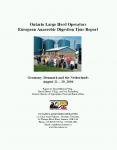
Ontario Large Herd Operators European Anaerobic Digestion Tour Report.

Reference icon
BRUYN, J. de; HOUSE, H.; RODENBURG, J. (2006): Ontario Large Herd Operators European Anaerobic Digestion Tour Report. Germany, Denmark and the Netherlands : Ontario Ministry of Agriculture, Food and Rural Affairs. URL [Accessed: 24.01.2011]

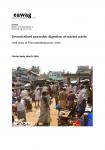
Decentralised anaerobic digestion of market waste. Case study in Thiruvananthapuram, India

Reference icon
HEEB, F. (2009): Decentralised anaerobic digestion of market waste. Case study in Thiruvananthapuram, India. Duebendorf: Swiss Federal Institute of Aquatic Science and Technology (EAWAG). URL [Accessed: 27.04.2010]
Decentralized anaerobic digestion is a promising technology to handle the large organic fraction of the municipal solid waste with the additional benefit of producing biogas as well as fertilizer. In this study a market level biogas plant in Thiruvananthapuram, South India and constructed by a NGO called BIOTECH is monitored and evaluated.

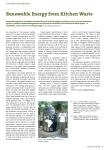
Renewable Energy from Kitchen Waste Download PDF Book

Reference icon
VOEGELI, Y.; LOHRI, C. (2009): Renewable Energy from Kitchen Waste. In: Sandec News 10. URL [Accessed: 05.05.2010]
This article talks about new treatment options for the anaerobic digestion of organic household waste in developing countries to improve waste management and provide households and institutions with biogas — a renewable, clean source of cooking energy.

Types of anaerobic digesters for solid wastes. Download PDF Book


Reference icon
VANDEVIVERE, P.; BAERE, L. de (2002): Types of anaerobic digesters for solid wastes. In: MATA-ALVAREZ, J. (Editor) (1999): Biomethanization of the Organic Fraction of Municipal Solid Wastes. London, 336 - 367. URL [Accessed: 30.05.2010]
This chapter presents and explains most common anaerobic digesters for solid waste. The different technologies are compared in respect to biological and technical performance as well as reliability. It was distinguished between one-stage, two-stage, and batch systems.

Organic Waste. Options for small-scale resource recovery. PDF Book

Reference icon
LARDINOIS, I.; KLUNDERT v.d., A. (1993): Organic Waste. Options for small-scale resource recovery. Gouda: WASTE Consultants.
This book is the first in a series on Urban Solid Waste Recovery, and represents an attempt to document the experiences of recycling activities in cities around the world. It covers the whole waste chain from municipal or agricultural generation of organic waste to different treatment methods, such as composting, co-composting, anaerobic digestion with production of biogas, and briquetting.

Biomethane and Biohydrogen. Status and perspectives of biological methane and hydrogen production. Download PDF Book

Reference icon
REITH, J.H. (Editor); WIJFFELS, R.H. (Editor); BARTEN, H. (Editor) (2003): Biomethane and Biohydrogen. Status and perspectives of biological methane and hydrogen production. Dutch Biological Hydrogen Foundation and the Netherlands Agency for Energy and the Environment (Novem).

The BIOTECH Plants

The BIOTECH Plants

 HEEB (2009)
Institutional level BIOTECH plant (left) and market level BIOTECH plant (right). Source: HEEB (2009)


 F. HEEB (2009)
The BIOTECH Roadshow. Source: F. HEEB (2009)

BIOTECH is a nodal agency of the Ministry of Non-Conventional Energy Sources in Kerala, South India (MUELLER 2007). BIOTECH has been developing and installing biogas plants that generate biogas from domestic biodegradable waste like cooked food waste, vegetable waste and waste water from kitchen (1 m3 for a 3 to 5 member family meets about 50 % of cooking needs, MUELLER 2007) (see picture above). BIOTECH has also developed reactors for the decentralised anaerobic digestion of organic market waste or municipal solid or slaughterhouse waste. The electricity generated from the decentralized plants for market wastes is used for street lightning and distributed to households.
 HEEB (2009)
Schematic plan of a BIOTECH market level plant. The sketch is not drawn to scale, but the proportions have been considered as far as possible. a) Inlet tank for feedstock. b) Digester tank. c) Effluent tank. d) Effluent storage tank. e) Effluent pump. f) Gasholder drum. The drum is stabilized by a guide pole in the middle and is floating in a water jacket outside the digester. g) Biogas pipe. h) Gas Scrubber. i) Biogas generator j) Drainage connection for excess effluent Source: HEEB (2009)

As the ARTIs, the BIOTECH market level plants are based on a floating-drum design including a recirculation loop to optimise moisture content (HEEB 2009). The feedstock (often market wastes) is put in the inlet tank from where it is flushed into the main digester tank for anaerobic digestion (3 m diameter and 3 m depth, HEEB 2009). To increase the retention time for solids, there is a baffle in the middle of the tank and orthogonal to the flow direction. The baffle holds back unsuspended solid compounds of the waste, whereas liquids can easily flow over (much like septic tanks or biogas digesters, see also factsheet (see also small scale digesters or biogas settlers). This leads to an increased retention time for unsuspended solids and therefore to an improved decomposition of this compounds. The digested liquor (digestate) flows into the effluent tank from where a pump, run with electricity of the produced biogas, transports it up into an overhead storage tank. From the tank, the digestate is then used to flush the feedstock from the inlet tank into the digester tank avoiding the need of fresh water for flushing (HEEB 2009).

Large-Scale Wet Digestion of Municipal Organic Waste

Large-Scale Wet Digestion of Municipal Organic Waste

 MUELLER (2007)
Digester and gas storage at the Rayong Municipality Cogeneration plant, Thailand. Source: MUELLER (2007)

In Thailand, the development of alternative energy sources is critical, as the government has set 2011 as the target date for 8% of the nation’s total energy reduction (MUELLER 2007). This has given large rise to various large-scale biogas projects. The Rayong Municipality has constructed a wet fed-batch high-solids plant for the treatment of the organic fraction of the municipal solid waste. The plant is comprised of two systems; a process that converts waste to biogas and fertiliser and a biogas-fired cogeneration process (CHP). Additional to the organic solid waste from the municipality, the Rayong plant uses food, vegetables and fruit wastes and night soil as waste materials. The plant has a capacity to handle 60 tons of waste per day turning out into an output of 5800 tons organic fertiliser and electricity of about 5 million kWh (MUELLER 2007).

The ARTI Compact Biogas Plant

The ARTI Compact Biogas Plant

 VOEGELI & LOHRI (2009) and HEEB (2009)
The ARTI household digester in Dar es Salaam, Tanzania (Left) and a similar model from BIOTECH. Source: VOEGELI & LOHRI (2009) and HEEB (2009)


ARTI stands for Appropriate Rural Technology Institute, which has developed the ARTI compact biogas plant in 2003 for the treatment of organic waste at the household level (1 to 2 Kg of food waste per day). The plant is sufficiently compact to be used also by urban households. Approximately 2000 such plants are currently in use in Maharashtra, India, in both urban and rural households (WRAPAI 2009). In Africa, only few ARTI biogas plants have been installed so far (Tanzania, VOEGELI & LOHRI 2009; VOEGELI et al. 2009).

ARTI compact biogas plants are based on a simple and low-cost floating-drum design applying a wet digestion process. The plants are made from conventional polythene water tanks (two tanks, with volumes of typically 0.75 m3and 1 m3, MUELLER 2007) and standard plumber piping. The smaller tank is the gasholder and is inverted over the larger one, which holds the mixture of decomposing feedstock and water (LOHRI 2009). An inlet is provided for adding feedstock, and an overflow for removing the digested residue. The overflow liquid can be mixed with the feedstock and recycled back into the plant to maintain optimal moisture condition for a wet digestion process (MUELLER 2007). A pipe takes the biogas to a collection balloon or directly to the kitchen.
Related Posts Plugin for WordPress, Blogger...