Showing posts with label anaerobic digester. Show all posts

Basic Anaerobic Digester ( PDF)

The Design and Theory of a Basic Anaerobic Digester


With environmental issues such as the greenhouse effect and correct waste disposal methods gaining much attention throughout the community, the concept of controlled anaerobic digestion is perhaps a much overlooked example of a way to reduce green house gas emissions and provide a better waste disposal method for organic waste.

Introduction 

Controlled anaerobic digestion is by no means a radical or new concept. Large scale industrial digesters and small domestic digesters are in operation in many places around the world. The purpose of all these digesters is to produce combustible biogas which can be burned to provide energy for a whole range of uses. Here in Australia, there is quite a bit of ideological interest in anaerobic digestion and biogas production, particularly from intensive farmers, but there are not many examples of digesters in operation. These farmers are interested in this topic primarily as an alternative energy source (biogas), and secondly, as part of an efficient effluent waste disposal system for the farm. Somehow there seems to be a problem in finding ways to put controlled anaerobic digestion into practice on the average Australian farm. There is almost a small library of information from all over the world on this topic, but this information doesn't seem to be reaching the average intensive farmer with some interest in this topic. Why isn't this concept being utilized more? There could be a number of possible reasons for this including the capital cost of setting up an anaerobic digester project, a lack of working models and / or a lack of a source of ideas to base individual projects on, i.e. - trouble shooting and project development at a technical 'on farm' level. The purpose of this project was to develop a small scale working prototype possibly suited to operate on the average farm. The focus of this project was the production of usable (combustible) biogas. This project is definitely not supposed to be revolutionary or radically new, but rather to be a starting point for further research and development in this area.  The purpose of this report is not to provide a method for the fabrication of the project produced (although a basic materials list will be provided). Rather, this report will aim to identify key aspects of the design, concentrating on their function and the theory behind their function. Therefore, the aim of this report is to provide the reader with a
basic explanation of the mechanics of a small, continuous flow anaerobic digester.

Download   PDF The Design and Theory of a Basic Anaerobic Digester

Anaerobic Digestion

 Anaerobic Digestion for Developing Countries with Cold Climates 


Utilizing solar heat to address technical challenges and facilitating dissemination through the use of carbon finance


Summary

A large proportion of the rural poor in developing countries have no access to a secure source of
energy. The  rural poor  in developing  countries  rely  primarily on  traditional  biomasses,  such  as
wood  and  charcoal.  The  reliance  on  traditional  biomasses  and  solid  fuels  result  in  substantial
human, social and environmental cost. To  tackle  these costs a switch  to a clean  fuel  is required.
One  of  the  solutions  is  anaerobic digestion  (AD)  of  manure  or  other  biodegradable matter  to
produce a clean fuel: biogas.
The principle of AD has been known for 3-4 centuries and in 1920 the first digester was
designed  for  house  on  site  biogas  production.  A  digester  is  a  technology which  converts  the
commonly found wastes in rural areas, manures, in a controlled anaerobic environment to biogas
and  an  excellent  fertilizer.   Biogas  is  a  clean,  convenient,  versatile  and  environmentally  benign
fuel which  does  not  pollute  the  indoor  air.  Furthermore,  a  biogas  plant  has  several  additional
benefits, such as replacing bought or collected wood (time or revenue savings), provision of light
by biogas lamps, empowerment of women by relieving them of the drudgeries of  traditional fuel
gathering. A toilet is in most cases attached to a digester which improves sanitation, a significant
virtue  since  the majority  of  the  poor  lack  access  to  sanitation. The  effluent  from  the  digester,
digestate,  has  a  high  fertilizer  value  comparable  to  chemical  fertilizers.  Digestate  is  also  an
excellent fish feed and can enhance fish yields. The adoption of biogas digesters has considerable
spillovers to the local, national and even to a global level. For instance, at local level, employment
opportunities, skills development and reduced pressure on the forest. At  a national level, it leads
to  less health costs, more employment, and potential  foreign exchange earnings and  at a global
level: greenhouse gas emission mitigation. Consequently, the cumulative effects of these benefits
alleviate poverty and contribute to achieve the Millennium Development Goals.

Download
 Anaerobic Digestion for Developing Countries with Cold Climates

Methane Bio-Gas Digesters

Methane Digesters 


flameWith gas and fuel oil prices on the rise, many people are tapping into the alternative energy market. Quite a few farmers and municipalities are turning sewage, manure, or garbage into fuel. What sort of fuel is it and what is the process that produces it? Well, the best answer is, its perfectly natural. When you bury garbage in a landfill, bacterial action decomposes and forms volatile gases. Over time those gases leak into the atmosphere and contribte to the greenhouse effect. Landfills in particular are being challenged to become emission free, by trapping and burning the "landfill gas". Landfill gas, or biogas, as it is now called, is composed of approsimately 65% methane, 30% carbon dioxide, and 5% other minor gases.
The process by which biogas is produced is anaerobic digestion; meaning without oxygen. This is not the same process as "composting" vegetation in your backyard. Composting requires aerating the mixture by turning; thereby exposing it to air (oxygen). The byproduct of this reaction is soil and predominantly carbon dioxide gas. Anaerboic digestion requires that the reaction take place in a container that is sealed or isolated from the outside air. The product is a large amount of methane, a little carbon dioxide, and a high grade fertilizer.
digester
A simple digester is just a big balloon full of crap! Once placed in a sealed container, oxygen loving bacteria within the orginal product begins to break down the manure into simpler compounds; these are typically ammonia compounds. At this point, a fair amount of CO2 is given off. Once all of the oxygen is used up, other critters, ammonia loving bacteria, take over. The ammonia loving bacteria work to liquefy the material. Eventually, fodder for the a ammonia loving bacteria is used up and the next process begins; the production of methane. For this process to begin and proceed in a timely manner, the reaction requires two things, a neutral or slightly basic pH and an optimum temperature. A well buffered digester will be at around 8 to 8.5 on the pH scale. A digester is pretty much self buffering once it is started, but you can speed things up by starting it off on the right foot. The optimum temperature is 95 degrees F to 110 degrees F. While you will produce gas at lower temperatures, it will take a much longer period of time. Landfills don't begin producing methane gas until many years after they are sealed up.
There are different types of digesters; the two major types being batch and continuous feed. Each is exactly as its name denotes. The simplest is the batch digester and it can literally be as simple as putting some cow manure in a barrel and sealing it up. However, without adding some heat, there will be very little perceptible activity. Add a little heat in the form of a drum heater, as shown in the picture above, and voila - instant fuel. A little tubing and a few valves, and you have a simple digester. We have heard of running a small gasoline engine from a barrel typ type batch digester. However, it is very limited in the amount of methane it can produce. Typical life of a batch digester is around 45 to 60 days. At that point, you would have to dump the fully digested material and refill the container with fresh manure.
The most practical type of digester is the continuous feed digester, since it will provide a continuous output of gas instead of a large volume all at once. A small quantity of manure is fed into one end of the digester at regular intervals. With each feeding, the previous "slugs" are forced along the lenght of the digester until it comes to the outlet at the other end; sort of like a big instestine!
TAP Point:
When you plan for your digester, plan for a constant supply of manure and a way of disposing of the effluent. The continuous feed digester requires regular feeding and will produce lots of high quality fertilzer and lots of gas!
Most of the examples we see today are on the large corporate farms with sophisticated controls and people to tend the daily needs of the digester. What about the small farm? Well, a digester can be designed to be as large or as small as you like. Design it to suit your needs and budget.
How can I use the methane that I produce?
Methane can be burned to provide both heat and cold. Used in an absorption chiller, the heat produced by burning methane can be converted to cooling for buildings or processes. This is actually a very efficient system since for every BTU produced, you get a BTU back in cooling. No so with electric production. If you choose to produce electricity, the system efficiency is very low. This is mainly due to the fact that internal combustion engines are exremely inefficient, only about 25% so. Diesel engines are higher, around 35%. However, if you opt for a conventional engine generator set, then you are going to end up with a converted gasoline engine.
Using the gas directly for water heating is another very efficient use of the fuel. New hot water tanks are around 95% efficient. If you start off with a small digester, then plan for several independent usage methods. That way if demand is low, you can use all of the gas that you produce. If you have to store it by compression, then you will use a lot of teh gas you produce just to compress the rest. This will discussed in more detail later.
Another way of utilizing the fuel you make is to heat water to make steam and drive a turbine connected to a generator. Most back yard mechanics are not going to tackle this and industrial units are hideously expensive. Still, there are some interesting new micro-turbines being marketed today that would be perfect for small installation.
Each of these alternatives requires a constant supply of gas, but will not be able to tolerate oversupply. Correct sizing of the components is critical to maintain operation and to get the most from your unit. It is impossbile to accurately determine the rate at which gas will be produced because of all the variables - manure content, temperature, amount of water. If you have control over at least some of these parameters, you should be able to predict the flow of gas within a reasonable tolerance. However, you need to plan for a reserve that can act as a flywheel or capacitor and provide even flow to your engine/generator. 

As we discussed in Part 1 of this series on Methane Digesters, the proces of producing methane from animal manure is called anaerobic digestion (without air or oxygen). Anaerobic digestion occurs when organic material decomposes biologically in the absence of oxygen. The process must take place in the complete absence of oxygen and so the digester must be leak tight and should maintain a positive pressure inside of the digester to keep air out. If the vessel is to be pressurized then it must be able to withstand a certain amount of pressure.
While there are many different organic compounds that can be digested to produce Biogas, some are better than others. Straight cow, pig, or chicken manure will work very well and produce lots of usable fuel. The amount of biogas that is produced with each material is shown in the chart below:
Cow.........................................3-5 cu ft/lb of solids
Pig............................................6-8 cu ft/lb of solids
Chicken....................................6-13 cu ft/lb of solids
Use this information in conjunction with the TAP Methane Calculator to determine the output of a digester for various feed stock. This will help you properly size the digester and the componenets that will be used in conjunction with it so that things do not get out of hand. For given volume of feedstock, the calculator will determine:
1. The amount of gas that will be produced.
2. Energy potential of the gas.
3. Size of engine/generator set that will consume 100% of the gas.
4. Cost of the TAP methane generator system.
5. Estimated cost of the engine/generator set.
6. Value of electricity produced if the gas is consumed in an engine/generator set.
7. Value of propane if the gas produced is used to replace propane in a heating system.
8. Value of gasoline if the gas produced is used in an automobile.
Proper sizing of components will allow for efficient use of materials to prevent a "runaway" system.
As we stated previously, the process that makes methane out of manure is anaerobic digestion. It is not just one simple process, but a series of complex processes acting in concert with one another. At each step in the process, compounds are produced that are used in the next step of the process. Once started, if the proper care is taken, the digester will be "self buffering;" which means all of the processes within the digester will reach a state of equilibrium with one another. A well buffered digester will be able to correct small upsets and achieve equilibrium again with no intervention from the operator. The best practice is "patience". Rather than try to correct a poorly producing or stuck digester, the best practice is to leave it along and let if correct itself. Keep it warm and feed it regularly and it will pump out a continuous stream of gas.
When the digester is first loaded and sealed, there will be a lot of oxygen trapped in the digester housing. Before the process of methane production can start, the oxygen must go. This will be taken care of by the oxygen loving bacteria that reside wihtin the maure. The process is fermentation. If there are no leaks, then all of the oxygen will be consumed within the period of about 2 weeks. During that time, large quantities of CO2 (carbon dioxide) will be produced. This can be vented off or extracted and compressed for other uses. CO2 is a greenhouse gas and there may be credits or financial incentives given for trapping it.
During the initial phase of the anaerobic process, proteins, fats, and starches are broken down into simpler compounds by acid producing bacteria. These bacteria multiply rapidly and excrete the enzymes that break down and liquefy the material. One of the acids that will be produced is acetic acid. Most of the methane that will be produced will come from the conversion of acetic acid.
At this point the methane producing bacteria can develop. This phase of the process moves slowly and it can take some time before large quantities of methane are produced. Ina continuous feed digester, a balance is struck between the acid producing bateria and the acid consuming/methane producing bacteria. This balance is maintained by regular feeding of fresh material, in the right quantity. Over or underfeeding can slow down the process or bring it to a halt.
The digester must be kept at a constant temperature in the range of 90 degrees F to 110 degrees F. This is usually accomplished by circulating heated water through pipes running through the interior of the digester. The heat can come from a boiler fired by the methane being produced, solar collectors, or heat from an internal combustion engine. A stationary engine consuming the gas produced to generate electricity is the most common method. While not the most efficient use of gas, the internal combustion engine produces large mounts of waste heat that can be channeled back into the digester. This is a good example of an energy system where the individual components compliment and support each other. Additional information about applying engines with digesters to produce electricity will be discussed in future articles.
In a continuous feed digester, as material is added at the inlet, material is forced out of the outlet. The feed and drain can be arranged so that the material comes inot the digester below the level of the contained fluid to maintain a seal. I advocate using a mixing chamber on the inlet and pumping the material into the digester with a sludge pump. The incoming material should be the consistency of molasses. The bacteria will liquefy the material once digestion starts so do not add a lot of water. Too much water will increase the CO2 output. The incoming material should only be wet enough to pump or pour it.
The effluent coming off of the other end of the digester is a high quality fertilizer. It does not have the high odor like raw dung. SInce it is already broken down into simpler compounds it can be used directly by plants. Driend effluent can be bagged and sold for fertilizer or used as bedding for animals.
Biogas is approximately 65% methane, 32% CO2, and some other trace gases (nitrogen, hydrogen, carbon monoxide, oxygen, and hydrogen sulfide). The energy content is 600 BTU per cu ft. Compared to other gaseous fuels:

Biogas..................................................600 BTU/cu ft
Natural gas.........................................1050 BTU/cu ft
Propane..............................................2400 BTU/cu ft
Biogas can be used directly in gas range, gas furnance, gas hot water tank, gas space heaters, gasoline or diesel engines. Obviously the energy value needs to be considered. It would be difficult at best to use biogas as a substitute for gasoline in an unmodified engine. The low energy value would reduce the power and pre-ignition would occur because of the mismatch in the required compression ratio. Still, its not that it can't be used - it just won't have the same performance. A better alternative is to use it as a supplement in a diesel engine. This can be accomplished be feeding the gas right into the air intake of the engine. The governer will back off to reduce the amount of diesel fuel compensate automatically. A duel fuel alternative is a very good way to ulitize the gas you produce with very little added effort. TAP Energy will be experimenting with a simplified conversion kit for diesel engines.
bunsen burnerUsing the biogas directly for heating or cooking is the most efficient method of capitalizing on your new energy source. An example can be seen in the Bunsen burner pictured to the left. In a gas range, very little difference may be seen over natural gas and no modification is necessary. In a hot water tank, the heat cycle time will increase by 30%, but no modification is required to substitute biogas for natural gas. The trace of hydrogen sulfide inherent in biogas makes it easy to detect a leak. Use the same precations you would use if you were working with natural gas.

anerobic digester process

 source:http://tap-energy.com/
Biogas Digester

 Biogas Digester
 
It is estimated that 2 cows or 10 pigs provide enough manure to fuel a family’s daily cooked meals. By combining an ancient process with engineered concepts, we have set out to introduce and implement small bio-gas plants to provide a source of methane gas for use in cooking and to power small gas lanterns.

When organic material decomposes under anaerobic (lack of oxygen) conditions, it produces biogas which is a mixture of methane (CH4) and carbon dioxide (CO2) with small quantities of hydrogen, nitrogen, carbon monoxide and other compounds. Biogas can be used as a fuel source for cooking, heating, producing light or even fueling a generator. A methane (BioGas) digester is a device used to produce and capture this biogas. Organic materials hereinto refers to excreta, or manure, of any animal but also refers to kitchenscraps and gardening waste.

The benefits of converting a limitless supply of manure and other organics into biogas include the following:
  • Biogas systems produce clean energy for household use.
  • Cooking on biogas is quicker, easier, and more efficient than cooking on wood or charcoal.
  • Biogas systems produce excellent nutrient-rich fertilizers for use on farms and gardens.
  • Biogas systems help in the fight against global warming by allowing us to burn methane instead of a harmful release into the atmosphere.
  • By utilizing a limitless supply of manure input, there will be no further necessity for costly resources such as propane, coal, or firewood and thus will allow for economical savings while supporting the regrowth of trees.

Polyethylene Tube Biodigesters installation manual PDF

Polyethylene Tube Biodigesters installation manual PDF


Download Source 


Plastic tube biodigester pdf
http://www.betuco.be/biogaz/Plastic%20tube%20biodigester.pdf

 Vietnam Plastic Tube Manual Biodigester pdf 

http://www.wcasfmra.org/biogas_docs/5%20Vietnam%20Plastic%20Tube%20Manual%20Biodigester.pdf

Biogas Utilization Handbook PDF

Biogas Utilization Handbook 

TABLE OF CONTENTS  (Con’t)
Chaoter  m
9  Instrumentation and Controls
for Biogas Equipment
Introduction
Gas Composition
Gas Caloric Value
Gas Density
Gas Flow
Pressure
Ambient  Exposure  Potential
Biogas Safety Considerations
Introduction
Toxicological Dangers
Flammability Dangers
Physical Dangers
Safety Equipment
Recommended  Safety Practices
References
IO
Appendix  A  - Alphabetical  Listing
of  Equipment  Suppliers
Appendix  B  - Listing  of  Companies
by Product  or Service


Download Resource :  http://www.p2pays.org/ref/22/21262.pdf

DESIGN OF BIOGAS PLANT PDF

DESIGN OF BIOGAS PLANT

Bio-gas Project, LGED

Introduction:
Biogas can be obtained from any organic materials after anaerobic fermentation by three main phases.


Download

Methane Digesters For Fuel Gas and Fertilizer PDF

Methane Digesters  For Fuel Gas and Fertilizer With Complete Instructions For Two Working Models

by
L. John Fry
Santa Barbara, California

"Methane Digesters" is also published, independently, as Newsletter No. 3,
Spring 1973,
by The New Alchemy Institute, Box 432, Woods Hole, Massachusetts 02543,


Eighth Printing
© 1973 L. John Fry
Richard Merrill

Inspiration: L. John Fry
Contributors: L. John Fry, Richard Merrill
Editors: Richard Merrill, Yedida Merrill
Artwork: Beth Amine
Thanks to: Earl Barnhart
Kim Mitchell

Download
 

Biogas from Animal Waste and Organic Industrial Waste PDF

Biogas from Animal Waste and Organic Industrial Waste

Kurt Hjort-Gregersen, M.sc.

Institute of Food and Ressource Economics
University of Copenhagen

Denmark

Biogas Plants in Denmark 1973 – 2008

Under changing motivations

1973-1985

Oil crisis - domestic energy supply
Less dependency on imported fuels – especially oil

1985-1995

Reduce nutrient losses from agriculture
Renewable energy

1995-2008

Tool for green house gas reduction
Sustainability in livestock production


Download PDF Biogas from Animal Waste and Organic Industrial Waste

Balaji Biogas System PDF

Installation of Balaji Biogas System and its Application with Purification and Bottling Biogas Unit


Introduction
At present our country is facing various problems which become more serious in next coming years. Demand of petroleum products is increasing, India has spending a big budget for importing these products and on the other hand our country faces serious problems like environmental pollution, disturbance in weather & global warming. India is an agriculture-based country and there is abundant availability of resources but these are not properly used and commercialized. In spite of all the developments and technologies are available yet the rural people facing the shortage of energy. The prime challenge for the country is to provide the minimum energy services to allow the rural people to achieve decent standard of living. The biogas plant is a boon to the Indian farmers. The two main products of the biogas plants are enriched compost manure and methane where as compost manure helps to meet the fertilizer requirements of the farmers in a more economical and efficient manner and boost agricultural production. Biogas is used for cooking and lighting purposes and in larger plants , as motive power for driving small engines.Indian government have installed gobar gas plants, which are approximately 12,00,000small, 3,40,000 medium, and 4,000 big gobar gas plant. If 20,00 gobar gas plants of 120 M3 hasbeen installed then approximately 6842 Lakh Rs. of diesel/petrol can save, but this project isfailed in few years no body have think that why this project is failed.Few years back KVIC & other agencies related to installation of bio gas plant installedtwo types of Biogas plant one was fixed dome and second was floating dome. Fixed domedigester was covered by concrete gas holder while floating dome digester was made up of metal(iron) sheet gas holder. Fixed dome digesters require one month for installation. After sometimes these types of digesters faced problem of scum deposition on upper surface which can notremoved easily, ultimately biogas production effected. In these plants high maintenance costwas required for removing scum. On the other hand floating gas holder (metal sheet) wascorroded due to contact with water and hydrogen sulfide. Second problem was that at the timefeeding few amounts of mud particles was present with feed, gradually this mud deposited in thelower surface of digester. Due to these problems digestion and gas formation is effected.Following problems keeping in mind we designed a low cost, easy and quick to install, durable,easy to maintain and anti corrosive type of biogas plant.


Download PDF Balaji Biogas Plant 

Biogas Plant Training Material PDF Books

Biogas Plant Training Material PDF Books

Reference icon
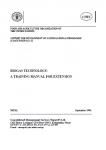
FAO (Editor) (1996): Biogas Technology - A Training Manual for Extension. Consolidated Management Services Nepal (P) Ltd. and Food and Agriculture Organization of the United Nations (FAO). URL [Accessed: 19.04.2010]
This manual contains a complete set of training materials on various topics around the large-scale dissemination of domestic (agricultural) biogas systems, including a system approach to biogas technology, biogas programmes, reuse of slurry, subsidy and institutional financing, quality standards and monitoring and evaluation issues.

Reference icon
LARDINOIS, I.; KLUNDERT v.d., A. (1993): Organic Waste. Options for small-scale resource recovery. Gouda: WASTE Consultants.
This book is the first in a series on Urban Solid Waste Recovery, and represents an attempt to document the experiences of recycling activities in cities around the world. It covers the whole waste chain from municipal or agricultural generation of organic waste to different treatment methods, such as composting, co-composting, anaerobic digestion with production of biogas, and briquetting.

Reference icon
MES, T.Z.D. de; STAMS, A.J.M. ; ZEEMAN, G. (2003): Chapter 4. Methane production by anaerobic digestion of wastewater and solid wastes. In: REITH, J.H. (Editor); WIJFFELS, R.H. (Editor); BARTEN, H. (Editor) (2003): Biomethane and Biohydrogen. Status and perspectives of biological methane and hydrogen production. , 58-94.
This chapter is part of a publication, commissioned by the Netherlands Agency for Energy and the Environment (Novem) on the status and perspectives of research and development in the field of high-tech biological production of methane and hydrogen. Chapter 4 gives a short but precise introduction the technological aspects of waste treatment by anaerobic digestion and the reuse of the produced biogas.

Reference icon
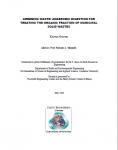
OSTREM, K. (2004): Greening Waste: Anaerobic Digestion for treating the organic Fraction of Municipal Solid Wastes. Colombia: The Fu Foundation of School of Engineering and Applied Science, Columbia University.
This paper outlines the processes of anaerobic digestion, reviews the current technology available for the anaerobic digestion of municipal organic wastes and proposes the adoption of the technology in the United States, beginning with commercial waste in New York City. The greatest concerns for New York are space and transportation, indicating that the most appropriate system is one using solid waste near the site of waste generation. A demonstration plant was constructed to show the improvement of local environmental conditions, job creation, and electricity generation in order to achieve support at policy level.

Reference icon
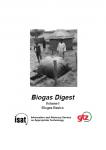
ISAT (Editor); GTZ (Editor) (1999): Biogas Basics. Information and Advisory Services on Appropriate Technology (ISAT) and German Agency for Technical Cooperation GmbH (GTZ) . URL [Accessed: 19.04.2010]
The information service on biogas technology has been developed and produced on the behalf of the GTZ project Information and Advisory Service on Appropriate Technology (ISAT). Volume I tells you all you need to get an overview on biogas sanitation systems, from history over process and operation parameters to social, political and cultural issues.

Reference icon
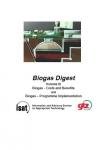
ISAT/GTZ (Editor) (1999): Biogas - Costs and Benefits and Biogas – Programme Implementation. Information and Advisory Services on Appropriate Technology (ISAT) and German Agency for Technical Cooperation GmbH (GmbH) . URL [Accessed: 19.04.2010]
This information service on biogas technology has been developed and produced on the order of the GTZ project Information and Advisory Service on Appropriate Technology (ISAT). Volume III discusses the micro- and macro-economic viability of biogas sanitation systems.

Reference icon
ISAT (Editor); GTZ (Editor) (1999): Biogas - Country Reports. Information and Advisory Services on Appropriate Technology (ISAT) and German Agency for Technical Cooperation GmbH (GTZ). URL [Accessed: 19.04.2010]
The information service on biogas technology has been developed and produced on the behalf of the GTZ project Information and Advisory Service on Appropriate Technology (ISAT). Volume IV summarises over 20 case studies from biogas sanitation as an appropriate technology in developing countries.

Biogas - Country Reports.

Reference icon
ISAT (Editor); GTZ (Editor) (1999): Biogas - Country Reports. Information and Advisory Services on Appropriate Technology (ISAT) and German Agency for Technical Cooperation GmbH (GTZ). URL [Accessed: 19.04.2010]
The information service on biogas technology has been developed and produced on the behalf of the GTZ project Information and Advisory Service on Appropriate Technology (ISAT). Volume IV summarises over 20 case studies from biogas sanitation as an appropriate technology in developing countries.

Biogas Plan Awareness Raising Material

Awareness Raising Material 

Reference icon
Naturgerechte Technologien (Editor) (2000): Anaerobic Methods of Waste Treatment. German Agency for Technical Cooperation GmbH (GTZ) and German Appropriate Technology Exchange (GATE). URL [Accessed: 20.04.2010]
This technical factsheet describes the treatment of wastes through anaerobic digestion and biogas production at large-scale in a very comprehensive way. The treatment of different wastes, including sewage sludge, agricultural and industrial wastes or solid municipal wastes, is emphasised.

Reference icon
TUHUS-DUBROW (2008): Waste? Not. In: The Boston Globe. URL [Accessed: 21.02.2010]
Critical article on conventional end-of-pipe wastewater approaches, introducing some alternatives such as biogas digester, arborloos or the fossa alterna.

Ontario Large Herd Operators European Anaerobic Digestion Tour Report.

Reference icon
BRUYN, J. de; HOUSE, H.; RODENBURG, J. (2006): Ontario Large Herd Operators European Anaerobic Digestion Tour Report. Germany, Denmark and the Netherlands : Ontario Ministry of Agriculture, Food and Rural Affairs. URL [Accessed: 24.01.2011]

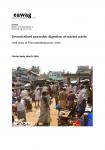
Decentralised anaerobic digestion of market waste. Case study in Thiruvananthapuram, India

Reference icon
HEEB, F. (2009): Decentralised anaerobic digestion of market waste. Case study in Thiruvananthapuram, India. Duebendorf: Swiss Federal Institute of Aquatic Science and Technology (EAWAG). URL [Accessed: 27.04.2010]
Decentralized anaerobic digestion is a promising technology to handle the large organic fraction of the municipal solid waste with the additional benefit of producing biogas as well as fertilizer. In this study a market level biogas plant in Thiruvananthapuram, South India and constructed by a NGO called BIOTECH is monitored and evaluated.

Renewable Energy from Kitchen Waste Download PDF Book

Reference icon
VOEGELI, Y.; LOHRI, C. (2009): Renewable Energy from Kitchen Waste. In: Sandec News 10. URL [Accessed: 05.05.2010]
This article talks about new treatment options for the anaerobic digestion of organic household waste in developing countries to improve waste management and provide households and institutions with biogas — a renewable, clean source of cooking energy.

Types of anaerobic digesters for solid wastes. Download PDF Book


Reference icon
VANDEVIVERE, P.; BAERE, L. de (2002): Types of anaerobic digesters for solid wastes. In: MATA-ALVAREZ, J. (Editor) (1999): Biomethanization of the Organic Fraction of Municipal Solid Wastes. London, 336 - 367. URL [Accessed: 30.05.2010]
This chapter presents and explains most common anaerobic digesters for solid waste. The different technologies are compared in respect to biological and technical performance as well as reliability. It was distinguished between one-stage, two-stage, and batch systems.

Organic Waste. Options for small-scale resource recovery. PDF Book

Reference icon
LARDINOIS, I.; KLUNDERT v.d., A. (1993): Organic Waste. Options for small-scale resource recovery. Gouda: WASTE Consultants.
This book is the first in a series on Urban Solid Waste Recovery, and represents an attempt to document the experiences of recycling activities in cities around the world. It covers the whole waste chain from municipal or agricultural generation of organic waste to different treatment methods, such as composting, co-composting, anaerobic digestion with production of biogas, and briquetting.
Related Posts Plugin for WordPress, Blogger...