Showing posts with label bio energy. Show all posts

Toilet Attached Biogas Plant

ECO-FRIENDLY TOILET ( Toilet Attached Biogas Plant )


The different kinds of bio waste including human excreta causing serious threat to human health and cleanliness of the surroundings can be converted to bioenergy and bio manure by treating with the application of biogas technology. This write up is intended to throw some light for imparting preliminary information about the working of the eco - friendly toilets developed by BIOTECH. In view of the ever increasing population and the scarcity of housing facilities, people particularly those belonging to the below poverty line are compelled to dwell in small cottages or huts built near the costal areas of the sea, or on the banks of rivers or by the sides of lakes. In these situations necessary modern facilities required for maintaining cleanliness are far beyond their reach. These people are even unable to construct good toilets for attending to the calls of nature. The main reasons attributable for this state of affairs are scarcity of suitable land, financial difficulties and above all the ignorance of the people as well. As a result of all these, a situation has emerged by which, people have to go searching for open spaces for finding a convenient place for passing urine and for related primary needs. It is also noticed that in certain places people are building toilets by erecting logs of woods over the water in the rivers and back waters. Even in the city areas in some places it is seen that people are connecting the pipes coming out of their toilets directly to the waste water drains and canals for flushing out the waste water and human excreta. All these tendencies will lead to the problem of serious contamination of water and pollution of the atmosphere. In high water level areas in the cities, it will not be possible to construct septic tanks. If, however, septic tanks are built in such places, the cost may be very high. According to the study reports published in recent times, it is seen that the drinking water sources as well as the underground water springs are being considerably contaminated. If the contamination of drinking water is continued as at present, the non availability of pure water may become a global phenomenon in the near future. The poisonous gases produced by the human excreta which are flushed out indiscriminately may linger in the atmosphere, and this may lead to such of the havocs as global warming, climate change etc. Even though many scientific methods have been developed for the treatment of human excreta, it has not so far become possible to take the full benefit to the people or to make the people fully conscious of all the advantages of the process. If the people are to show any interest in the scientific technology, they should be made to understand that the inherent benefits derived from the process will accrue to the people themselves. Further the common people should be enabled to take up such projects without incurring any additional financial burden for them or they should be provided with adequate financial support by different agencies to embark upon such schemes. Selection of the Size of the Plant It is sufficient to have a treatment plant of 2 Cum size, for treating human waste and bio waste generated in a household having a family comprising up to a total of five members. The most important point to be taken note of while operating a plant is, to regulate the quantity of waste to be fed into the plant, strictly in accordance with the optimum treatment capacity per day. If, however, the plant is overfed by the deposit of more quantity of waste, the working efficiency of the plant will gradually become deteriorated. In such situations the gas produced from such plants may not be ignited, and in some cases stink odour may also come out from the plant in a large measure. But if the plant is fed with the bio waste in accordance with its treatment capacity, the plant will work very efficiently for a pretty long period. Even if the quantity of waste fed into the plant is a little less than the prescribed limit, or the plant is not fed at all for a few days the working of the plant will not be affected. But the quantity of bio gas produced will be found to be a little reduced in proportion to the quantity of waste fed into the plant. Apart from households, the public institutions like hostels, convents, hospitals etc where people are coming in for short stays, the toilets can be attached with large sized plants for treating the human wastes for the production of energy. The size of such plants is determined in accordance with the total number of inmates of those institutions. If the plants of the required size are not selected correctly, the working of the plant may be in trouble. Operation of the Plant After the plant has been installed, anaerobic bacteria is allowed to grow and multiply with in the plant. After a period of two or three days the plant will be in working condition and the production of biogas will commence in full scale. A pipe from the toilet can be attached to the plant. The required facility for this will be provided in the plant. The food waste generated from the household and the waste water can be treated in the plant. Separate inlets for depositing these wastes are available in the plant. The bio waste and the human excreta that reach inside the plant will be decomposed by the work of the bacteria and transformed into biogas and bio manure. The biogas produced is collected in the gas chamber of the plant. This gas can be taken as fuel for cooking purposes by connecting the gas to the stove in the kitchen using separate pipe line. The stoves required for the purpose will be made available along with the plant. The biogas obtained from the waste treatment plants installed in the houses having a total number up to five family members, will be sufficient for meeting 70% to 90% of energy required for cooking purposes. In the meantime if the toilet is also attached to the plant more than 90% to 100% of the fuel requirement of the family can be met from the biogas produced in the plant. Financial benefits By constructing eco friendly toilet, although numerous benefits can be derived, the main achievement is the financial gain of this project. By utilizing the biogas produced by the waste treatment plant attached to the toilet, the entire expenditure incurred for the installation of the plant is seen received back within a period of nearly one and a half years. This is a very useful project, according to which, even if the expenditure incurred for the construction of the toilet is also taken into account the whole amount spent for the purpose can be fully retrieved within a limited period of nearly two years. Apart from this, the amount to be invested for the construction of the septic tank can also be saved, and this is yet another financial benefit. In brief, it can be realized that this is a programme by which substantial amount of avoidable expenditure can be saved. Possibilities for the Future By the implementation of the scheme through which a lasting solution is sought against the increasing fuel crisis, frightening environmental pollution, and alarming hygienic problems, we are launching the commencement of a new era of silent revolution in areas of waste treatment, pollution free atmosphere and cleaner environment. For those persons who are looking for private spaces for attending to their calls of nature can maintain healthy and cleaner habits to become partners for the prevention of contamination of the earth and the atmosphere. By making use of the biogas produced of their own, the people can reduce the use of other fuels considerably. Through the establishment of eco friendly toilets and installation of biogas plants, the enormous cost of fuel worth crores of rupees can be gained by our people particularly our country. For this, we seek the unstinted co-operation and whole hearted support of one and all. 
Descriptive tags: bio energy bio energy india bio fertilizer bio manure biogas india domestic biogas plant electricity from waste energy from waste gobar gas gobar gas plant kitchen waste to biogas liquid fertilizer liquid manure organic fertilizer organic manure pre fabricated biogas plant waste to electricity waste to energy

http://www.communityofsweden.com/forum/topic/?topic=1235 

A better biogas plant for your home

The use of waste food instead of dung as feedstock makes this biogas plant distinct and more practical to use by people in both rural and urban areas
What comes to your mind first when “a biogas plant” is mentioned? Does the picture include a large smelly tank attached to a gas stove used mostly in villages?
Well, you might have been correct if not for an innovative compact biogas plant that uses waste food rather than cattle dung as the feedstock! Brainchild of Dr Anand Karve, a Pune-based biologist, this biogas plant can be used both in rural and urban households, thanks to the source of energy.
Dr Anand Karve Appropriate Rural Technology Institute (ARTI)
The use of biogas – a mixture of mainly methane and some carbon dioxide – as an alternative to conventional fuels such as coal and LPG in rural households is not new. However, the size of the plant and its reliance on large quantities of cattle dung has acted as a dampener for urban households. Also, because of the dung’s low calorific value, the energy produced per kilogram of dung is low vis-à-vis waste food. It was this that made Dr Karve decide on replacing the traditional feedstock with waste food as the input. “It is known that methane gas can be produced from sugar, starch, cellulose and fat, and one kg of food waste (dry weight) – which contains starch, sugar, protein or fat – yields about 250 gms of methane. So I decided to replace dung used in a conventional biogas plant with waste food,” says Dr Karve, who runs Appropriate Rural Technology Institute (ARTI), an NGO. The result was an efficient and less cumbersome device that can also be used in urban households.
Since 2006, nearly 3,000 such plants have been installed both in India and abroad in rural and urban households and in commercial establishments such as hostels and hotels.
BenefitsSo why has this biogas plant aroused a lot of interest? There are several reasons behind this.
One, the conventional biogas plant produces 250 gms of biogas from 40 kgs of excreta in 40 days. In contrast, the new plant requires just 1 kg of sugar or starch – in the form of waste food from household or hotels, spoilt grain, overripe fruit, non-edible seeds, kitchen waste, etc. – to produce the same quantity of methane in just 24 hours. According to Dr Karve, through the use of this compact system it has been demonstrated that using feedstock having higher calorific value increases the efficiency of methane generation.
Two, the choice of feedstock facilitates its use in urban households. Reliance on cattle excreta has been one of the major restricting factors limiting its usage in urban homes. Traditional plants require approximately 40 kg of input on a daily basis, and have a high retention period of 40 days. The large quantity of input and the longer period require plenty of storage space, which is a major constraint in cities.
==============================================

How does it work?

The standard plant uses two tanks, which typically have a volume of 0.75 cu.m. and 1 cu.m. The smaller tank, which is the gas holder, is inverted over the larger one containing a mixture of feedstock and water. An inlet pipe is provided for adding feedstock and an overflow pipe for removing the digested residue.
A pipe takes the biogas to the kitchen, where it is used with a biogas stove.
The gas holder gradually rises as gas is produced, and sinks down again as the gas is used for cooking.
Initially the plant is fed with a starter mix, which contains either cattle dung mixed with water and waste flour or effluent from an existing biogas plant mixed with starch. The feeding of the plant is built up over a few weeks.
 ==================================================
hree, according to Dr. Karve the higher calorific value of the input results in better quality of gas thus produced. From the point of view of conversion of feedstock into methane, this system is 400 times more efficient than conventional system. He says, the biogas thus produced has all the virtues of LPG – it produces a clean blue flame, has the same intensity, provides finger tip control of flame, produces no soot and smoke, etc. As methane has the same calorific value as LPG, it becomes as efficient and cost effective too.

Source:http://www.dare.co.in/people/featured-innovation/a-better-biogas-plant-for-your-home.htm

Polyethylene Tube Biodigesters installation manual PDF

Polyethylene Tube Biodigesters installation manual PDF


Download Source 


Plastic tube biodigester pdf
http://www.betuco.be/biogaz/Plastic%20tube%20biodigester.pdf

 Vietnam Plastic Tube Manual Biodigester pdf 

http://www.wcasfmra.org/biogas_docs/5%20Vietnam%20Plastic%20Tube%20Manual%20Biodigester.pdf

Biogas Utilization Handbook PDF

Biogas Utilization Handbook 

TABLE OF CONTENTS  (Con’t)
Chaoter  m
9  Instrumentation and Controls
for Biogas Equipment
Introduction
Gas Composition
Gas Caloric Value
Gas Density
Gas Flow
Pressure
Ambient  Exposure  Potential
Biogas Safety Considerations
Introduction
Toxicological Dangers
Flammability Dangers
Physical Dangers
Safety Equipment
Recommended  Safety Practices
References
IO
Appendix  A  - Alphabetical  Listing
of  Equipment  Suppliers
Appendix  B  - Listing  of  Companies
by Product  or Service


Download Resource :  http://www.p2pays.org/ref/22/21262.pdf

DESIGN OF BIOGAS PLANT PDF

DESIGN OF BIOGAS PLANT

Bio-gas Project, LGED

Introduction:
Biogas can be obtained from any organic materials after anaerobic fermentation by three main phases.


Download

Methane Digesters For Fuel Gas and Fertilizer PDF

Methane Digesters  For Fuel Gas and Fertilizer With Complete Instructions For Two Working Models

by
L. John Fry
Santa Barbara, California

"Methane Digesters" is also published, independently, as Newsletter No. 3,
Spring 1973,
by The New Alchemy Institute, Box 432, Woods Hole, Massachusetts 02543,


Eighth Printing
© 1973 L. John Fry
Richard Merrill

Inspiration: L. John Fry
Contributors: L. John Fry, Richard Merrill
Editors: Richard Merrill, Yedida Merrill
Artwork: Beth Amine
Thanks to: Earl Barnhart
Kim Mitchell

Download
 

Biogas from Animal Waste and Organic Industrial Waste PDF

Biogas from Animal Waste and Organic Industrial Waste

Kurt Hjort-Gregersen, M.sc.

Institute of Food and Ressource Economics
University of Copenhagen

Denmark

Biogas Plants in Denmark 1973 – 2008

Under changing motivations

1973-1985

Oil crisis - domestic energy supply
Less dependency on imported fuels – especially oil

1985-1995

Reduce nutrient losses from agriculture
Renewable energy

1995-2008

Tool for green house gas reduction
Sustainability in livestock production


Download PDF Biogas from Animal Waste and Organic Industrial Waste

Biogas Plant Training Material PDF Books

Biogas Plant Training Material PDF Books

Reference icon
FAO (Editor) (1996): Biogas Technology - A Training Manual for Extension. Consolidated Management Services Nepal (P) Ltd. and Food and Agriculture Organization of the United Nations (FAO). URL [Accessed: 19.04.2010]
This manual contains a complete set of training materials on various topics around the large-scale dissemination of domestic (agricultural) biogas systems, including a system approach to biogas technology, biogas programmes, reuse of slurry, subsidy and institutional financing, quality standards and monitoring and evaluation issues.

Reference icon
LARDINOIS, I.; KLUNDERT v.d., A. (1993): Organic Waste. Options for small-scale resource recovery. Gouda: WASTE Consultants.
This book is the first in a series on Urban Solid Waste Recovery, and represents an attempt to document the experiences of recycling activities in cities around the world. It covers the whole waste chain from municipal or agricultural generation of organic waste to different treatment methods, such as composting, co-composting, anaerobic digestion with production of biogas, and briquetting.

Reference icon
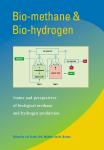
MES, T.Z.D. de; STAMS, A.J.M. ; ZEEMAN, G. (2003): Chapter 4. Methane production by anaerobic digestion of wastewater and solid wastes. In: REITH, J.H. (Editor); WIJFFELS, R.H. (Editor); BARTEN, H. (Editor) (2003): Biomethane and Biohydrogen. Status and perspectives of biological methane and hydrogen production. , 58-94.
This chapter is part of a publication, commissioned by the Netherlands Agency for Energy and the Environment (Novem) on the status and perspectives of research and development in the field of high-tech biological production of methane and hydrogen. Chapter 4 gives a short but precise introduction the technological aspects of waste treatment by anaerobic digestion and the reuse of the produced biogas.

Reference icon
OSTREM, K. (2004): Greening Waste: Anaerobic Digestion for treating the organic Fraction of Municipal Solid Wastes. Colombia: The Fu Foundation of School of Engineering and Applied Science, Columbia University.
This paper outlines the processes of anaerobic digestion, reviews the current technology available for the anaerobic digestion of municipal organic wastes and proposes the adoption of the technology in the United States, beginning with commercial waste in New York City. The greatest concerns for New York are space and transportation, indicating that the most appropriate system is one using solid waste near the site of waste generation. A demonstration plant was constructed to show the improvement of local environmental conditions, job creation, and electricity generation in order to achieve support at policy level.

Reference icon
ISAT (Editor); GTZ (Editor) (1999): Biogas Basics. Information and Advisory Services on Appropriate Technology (ISAT) and German Agency for Technical Cooperation GmbH (GTZ) . URL [Accessed: 19.04.2010]
The information service on biogas technology has been developed and produced on the behalf of the GTZ project Information and Advisory Service on Appropriate Technology (ISAT). Volume I tells you all you need to get an overview on biogas sanitation systems, from history over process and operation parameters to social, political and cultural issues.

Reference icon
ISAT/GTZ (Editor) (1999): Biogas - Costs and Benefits and Biogas – Programme Implementation. Information and Advisory Services on Appropriate Technology (ISAT) and German Agency for Technical Cooperation GmbH (GmbH) . URL [Accessed: 19.04.2010]
This information service on biogas technology has been developed and produced on the order of the GTZ project Information and Advisory Service on Appropriate Technology (ISAT). Volume III discusses the micro- and macro-economic viability of biogas sanitation systems.

Reference icon
ISAT (Editor); GTZ (Editor) (1999): Biogas - Country Reports. Information and Advisory Services on Appropriate Technology (ISAT) and German Agency for Technical Cooperation GmbH (GTZ). URL [Accessed: 19.04.2010]
The information service on biogas technology has been developed and produced on the behalf of the GTZ project Information and Advisory Service on Appropriate Technology (ISAT). Volume IV summarises over 20 case studies from biogas sanitation as an appropriate technology in developing countries.

Biogas - Country Reports.

Reference icon
ISAT (Editor); GTZ (Editor) (1999): Biogas - Country Reports. Information and Advisory Services on Appropriate Technology (ISAT) and German Agency for Technical Cooperation GmbH (GTZ). URL [Accessed: 19.04.2010]
The information service on biogas technology has been developed and produced on the behalf of the GTZ project Information and Advisory Service on Appropriate Technology (ISAT). Volume IV summarises over 20 case studies from biogas sanitation as an appropriate technology in developing countries.

Biogas Plan Awareness Raising Material

Awareness Raising Material 

Reference icon
Naturgerechte Technologien (Editor) (2000): Anaerobic Methods of Waste Treatment. German Agency for Technical Cooperation GmbH (GTZ) and German Appropriate Technology Exchange (GATE). URL [Accessed: 20.04.2010]
This technical factsheet describes the treatment of wastes through anaerobic digestion and biogas production at large-scale in a very comprehensive way. The treatment of different wastes, including sewage sludge, agricultural and industrial wastes or solid municipal wastes, is emphasised.

Reference icon
TUHUS-DUBROW (2008): Waste? Not. In: The Boston Globe. URL [Accessed: 21.02.2010]
Critical article on conventional end-of-pipe wastewater approaches, introducing some alternatives such as biogas digester, arborloos or the fossa alterna.

Ontario Large Herd Operators European Anaerobic Digestion Tour Report.

Reference icon
BRUYN, J. de; HOUSE, H.; RODENBURG, J. (2006): Ontario Large Herd Operators European Anaerobic Digestion Tour Report. Germany, Denmark and the Netherlands : Ontario Ministry of Agriculture, Food and Rural Affairs. URL [Accessed: 24.01.2011]

Decentralised anaerobic digestion of market waste. Case study in Thiruvananthapuram, India

Reference icon
HEEB, F. (2009): Decentralised anaerobic digestion of market waste. Case study in Thiruvananthapuram, India. Duebendorf: Swiss Federal Institute of Aquatic Science and Technology (EAWAG). URL [Accessed: 27.04.2010]
Decentralized anaerobic digestion is a promising technology to handle the large organic fraction of the municipal solid waste with the additional benefit of producing biogas as well as fertilizer. In this study a market level biogas plant in Thiruvananthapuram, South India and constructed by a NGO called BIOTECH is monitored and evaluated.

Renewable Energy from Kitchen Waste Download PDF Book

Reference icon
VOEGELI, Y.; LOHRI, C. (2009): Renewable Energy from Kitchen Waste. In: Sandec News 10. URL [Accessed: 05.05.2010]
This article talks about new treatment options for the anaerobic digestion of organic household waste in developing countries to improve waste management and provide households and institutions with biogas — a renewable, clean source of cooking energy.

Types of anaerobic digesters for solid wastes. Download PDF Book


Reference icon
VANDEVIVERE, P.; BAERE, L. de (2002): Types of anaerobic digesters for solid wastes. In: MATA-ALVAREZ, J. (Editor) (1999): Biomethanization of the Organic Fraction of Municipal Solid Wastes. London, 336 - 367. URL [Accessed: 30.05.2010]
This chapter presents and explains most common anaerobic digesters for solid waste. The different technologies are compared in respect to biological and technical performance as well as reliability. It was distinguished between one-stage, two-stage, and batch systems.

Organic Waste. Options for small-scale resource recovery. PDF Book

Reference icon
LARDINOIS, I.; KLUNDERT v.d., A. (1993): Organic Waste. Options for small-scale resource recovery. Gouda: WASTE Consultants.
This book is the first in a series on Urban Solid Waste Recovery, and represents an attempt to document the experiences of recycling activities in cities around the world. It covers the whole waste chain from municipal or agricultural generation of organic waste to different treatment methods, such as composting, co-composting, anaerobic digestion with production of biogas, and briquetting.

Biomethane and Biohydrogen. Status and perspectives of biological methane and hydrogen production. Download PDF Book

Reference icon
REITH, J.H. (Editor); WIJFFELS, R.H. (Editor); BARTEN, H. (Editor) (2003): Biomethane and Biohydrogen. Status and perspectives of biological methane and hydrogen production. Dutch Biological Hydrogen Foundation and the Netherlands Agency for Energy and the Environment (Novem).

The BIOTECH Plants

The BIOTECH Plants

 HEEB (2009)
Institutional level BIOTECH plant (left) and market level BIOTECH plant (right). Source: HEEB (2009)


 F. HEEB (2009)
The BIOTECH Roadshow. Source: F. HEEB (2009)

BIOTECH is a nodal agency of the Ministry of Non-Conventional Energy Sources in Kerala, South India (MUELLER 2007). BIOTECH has been developing and installing biogas plants that generate biogas from domestic biodegradable waste like cooked food waste, vegetable waste and waste water from kitchen (1 m3 for a 3 to 5 member family meets about 50 % of cooking needs, MUELLER 2007) (see picture above). BIOTECH has also developed reactors for the decentralised anaerobic digestion of organic market waste or municipal solid or slaughterhouse waste. The electricity generated from the decentralized plants for market wastes is used for street lightning and distributed to households.
 HEEB (2009)
Schematic plan of a BIOTECH market level plant. The sketch is not drawn to scale, but the proportions have been considered as far as possible. a) Inlet tank for feedstock. b) Digester tank. c) Effluent tank. d) Effluent storage tank. e) Effluent pump. f) Gasholder drum. The drum is stabilized by a guide pole in the middle and is floating in a water jacket outside the digester. g) Biogas pipe. h) Gas Scrubber. i) Biogas generator j) Drainage connection for excess effluent Source: HEEB (2009)

As the ARTIs, the BIOTECH market level plants are based on a floating-drum design including a recirculation loop to optimise moisture content (HEEB 2009). The feedstock (often market wastes) is put in the inlet tank from where it is flushed into the main digester tank for anaerobic digestion (3 m diameter and 3 m depth, HEEB 2009). To increase the retention time for solids, there is a baffle in the middle of the tank and orthogonal to the flow direction. The baffle holds back unsuspended solid compounds of the waste, whereas liquids can easily flow over (much like septic tanks or biogas digesters, see also factsheet (see also small scale digesters or biogas settlers). This leads to an increased retention time for unsuspended solids and therefore to an improved decomposition of this compounds. The digested liquor (digestate) flows into the effluent tank from where a pump, run with electricity of the produced biogas, transports it up into an overhead storage tank. From the tank, the digestate is then used to flush the feedstock from the inlet tank into the digester tank avoiding the need of fresh water for flushing (HEEB 2009).

Large-Scale Wet Digestion of Municipal Organic Waste

Large-Scale Wet Digestion of Municipal Organic Waste

 MUELLER (2007)
Digester and gas storage at the Rayong Municipality Cogeneration plant, Thailand. Source: MUELLER (2007)

In Thailand, the development of alternative energy sources is critical, as the government has set 2011 as the target date for 8% of the nation’s total energy reduction (MUELLER 2007). This has given large rise to various large-scale biogas projects. The Rayong Municipality has constructed a wet fed-batch high-solids plant for the treatment of the organic fraction of the municipal solid waste. The plant is comprised of two systems; a process that converts waste to biogas and fertiliser and a biogas-fired cogeneration process (CHP). Additional to the organic solid waste from the municipality, the Rayong plant uses food, vegetables and fruit wastes and night soil as waste materials. The plant has a capacity to handle 60 tons of waste per day turning out into an output of 5800 tons organic fertiliser and electricity of about 5 million kWh (MUELLER 2007).

The ARTI Compact Biogas Plant

The ARTI Compact Biogas Plant

 VOEGELI & LOHRI (2009) and HEEB (2009)
The ARTI household digester in Dar es Salaam, Tanzania (Left) and a similar model from BIOTECH. Source: VOEGELI & LOHRI (2009) and HEEB (2009)


ARTI stands for Appropriate Rural Technology Institute, which has developed the ARTI compact biogas plant in 2003 for the treatment of organic waste at the household level (1 to 2 Kg of food waste per day). The plant is sufficiently compact to be used also by urban households. Approximately 2000 such plants are currently in use in Maharashtra, India, in both urban and rural households (WRAPAI 2009). In Africa, only few ARTI biogas plants have been installed so far (Tanzania, VOEGELI & LOHRI 2009; VOEGELI et al. 2009).

ARTI compact biogas plants are based on a simple and low-cost floating-drum design applying a wet digestion process. The plants are made from conventional polythene water tanks (two tanks, with volumes of typically 0.75 m3and 1 m3, MUELLER 2007) and standard plumber piping. The smaller tank is the gasholder and is inverted over the larger one, which holds the mixture of decomposing feedstock and water (LOHRI 2009). An inlet is provided for adding feedstock, and an overflow for removing the digested residue. The overflow liquid can be mixed with the feedstock and recycled back into the plant to maintain optimal moisture condition for a wet digestion process (MUELLER 2007). A pipe takes the biogas to a collection balloon or directly to the kitchen.
Related Posts Plugin for WordPress, Blogger...